Software pricing pages are written for one person. Almost nobody buys software for one person.
Across the 195 tools whose monthly price the vendor publishes, the median entry plan is $19.99. That number survives contact with reality for exactly as long as you have one employee.
The two curves
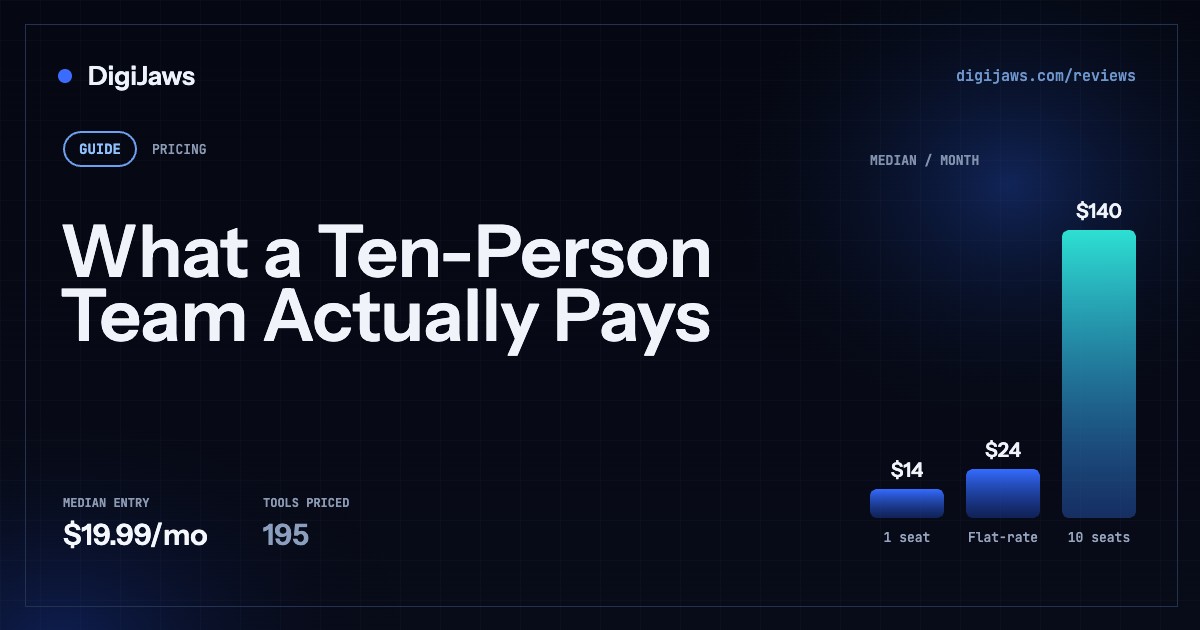
59 of those tools charge per seat. 136 charge flat. At a headcount of one, the per-seat tools actually look cheaper — median $14 against $24.
Add nine colleagues and the picture inverts completely:
| 1 person | 10 people | |
|---|---|---|
| Per-seat tools (median) | $14 | $140 |
| Flat-rate tools (median) | $24 | $24 |
The flat number does not move. That is the whole point of it, and it is the single most useful thing to know before you compare two prices that look similar.
The steep end
Some per-seat tools scale harder than others. At ten seats, from published entry rates:
- Sprout Social — $1,990 a month
- Agorapulse — $790
- Zendesk — $550
- Deel — $490
- LangChain — $390
Sprout Social’s entry plan reads as $199. For a ten-person social team it is very nearly $24,000 a year, which is a different conversation with a different person in your organisation.
Three things that change the arithmetic
Viewer seats. Several vendors charge only for editors and let read-only users in free. On a team where most people look and few people build, this can halve the bill — and it is almost never in the headline.
Seat minimums. Asana’s Starter and Advanced plans require at least two seats. A solo user cannot buy the advertised rate at all, which makes the published entry price unavailable to exactly the person most likely to be shopping on it.
Tier cliffs triggered by headcount. The upgrade that gets forced on you is usually not about features. It is about the seat count or the usage threshold attached to your current plan, and it arrives without warning.
The rule worth internalising
Below about five people, flat-rate tools win almost every time. Above twenty, per-seat tools with a generous viewer role often beat flat tools that have by then been pushed into an enterprise tier.
Between five and twenty it genuinely depends on your read-to-write ratio — and that is precisely the range most teams are in when they pick a stack they will still be paying for three years later.
Per-seat status and entry prices verified from each vendor’s own page. Run your own headcount through the stack cost calculator, or read the full dataset.
What a ten-person team actually pays. DigiJaws, 2026. https://digijaws.com/reviews/what-a-ten-person-team-pays/